Google Drive website hosting is gone.
Back in the day, you could just upload your website files to Google Drive. And your website would be available at `googledrive.com/host/[file id]`.
The good news? There are over dozens of better options now.
Some of these are dead simple. Some are built for developers.
In this article, I’ll share with you:
- The easiest way to host your static website files.
- 7 alternatives to Google Drive website hosting.
- 3 best Google Drive alternatives for cloud storage.
Why Google Drive No Longer Works for Website Hosting
Google Drive used to offer a lightweight website hosting feature.
It would allow you to host any file you wanted. It would become available at `googledrive.com/host/[file id]`.
That is no longer possible because Google killed that feature in 2016. They first deprecated the feature on August 31, 2015 before completely killing it.
Google’s official announcement didn’t give a reason as to why they did it. But it’s probably so they could focus more than file storage, file management and collaboration features inside the wider Google Apps ecosystem
Today, Google Drive is still and one of the most important parts of Google Workspace. It’s great for storing documents and backing up uploaded files.
Best Google Drive Hosting Alternatives
Disk Space | Ease of Setup | CDN | Bandwidth | Best for | |
TiinyHost | 3 MB | ⭐️⭐️⭐️⭐️⭐️ (Drag & Drop) | Yes | 5 GB | Everyone - No coding or technical knowledge required |
Cloudflare Pages | N/A | ⭐️⭐️ (Requires learning git) | Yes | Unlimited | Developers who know their way around Git |
Netlify | 10 GB | ⭐️⭐️⭐️ (Requires learning git) | Yes | 100 GB | Developers, JAMstack sites |
Vercel | 1 GB | ⭐️⭐️⭐️ (Requires learning git) | Yes | 100 GB | Next.js / React developers |
Render | 1 GB | ⭐️⭐️ (Requires learning git) | Yes | 100 GB | Developers, JAMstack sites |
GitHub Pages | 1 GB | ⭐️⭐️ (Requires learning git) | No | 100 GB | Developers with GitHub repos |
Amazon S3 | Unlimited | ⭐️ (Complex setup) | No | Unlimited | Developers who don't mind spending a little time setting everything up |
TiinyHost - The Best Google Drive Hosting Alternative
If you liked the Google Drive web hosting feature for its simplicity, you’ll love TiinyHost.
It is one of the fastest and easiest ways to host your files online. Whether you want to host a PDF file, a static portfolio, or a quick MVP, TiinyHost is the best place to start.
All the other hosting options on this list require knowledge of Git and some even require a little programming knowledge. They need you to set up a Git repository and set deployment rules.
This is where TiinyHost shines.
It doesn’t require you to set up Git repositories. No need to mess around with CLI tools. No figuring out how Github works.
Just upload your files, create an account, and hit publish!
Whether you’re a freelancer who wants to show a mockup to a client, or a founder testing a landing page for product validation, you probably don’t want to deal with Github repos and build logs.
That’s what makes TiinyHost the best alternative to Google Drive.
The best part? It takes less than 5 minutes to host your files on TiinyHost.
Don’t believe me?
Let me show you how simple it is.
Navigate to the TiinyHost website.
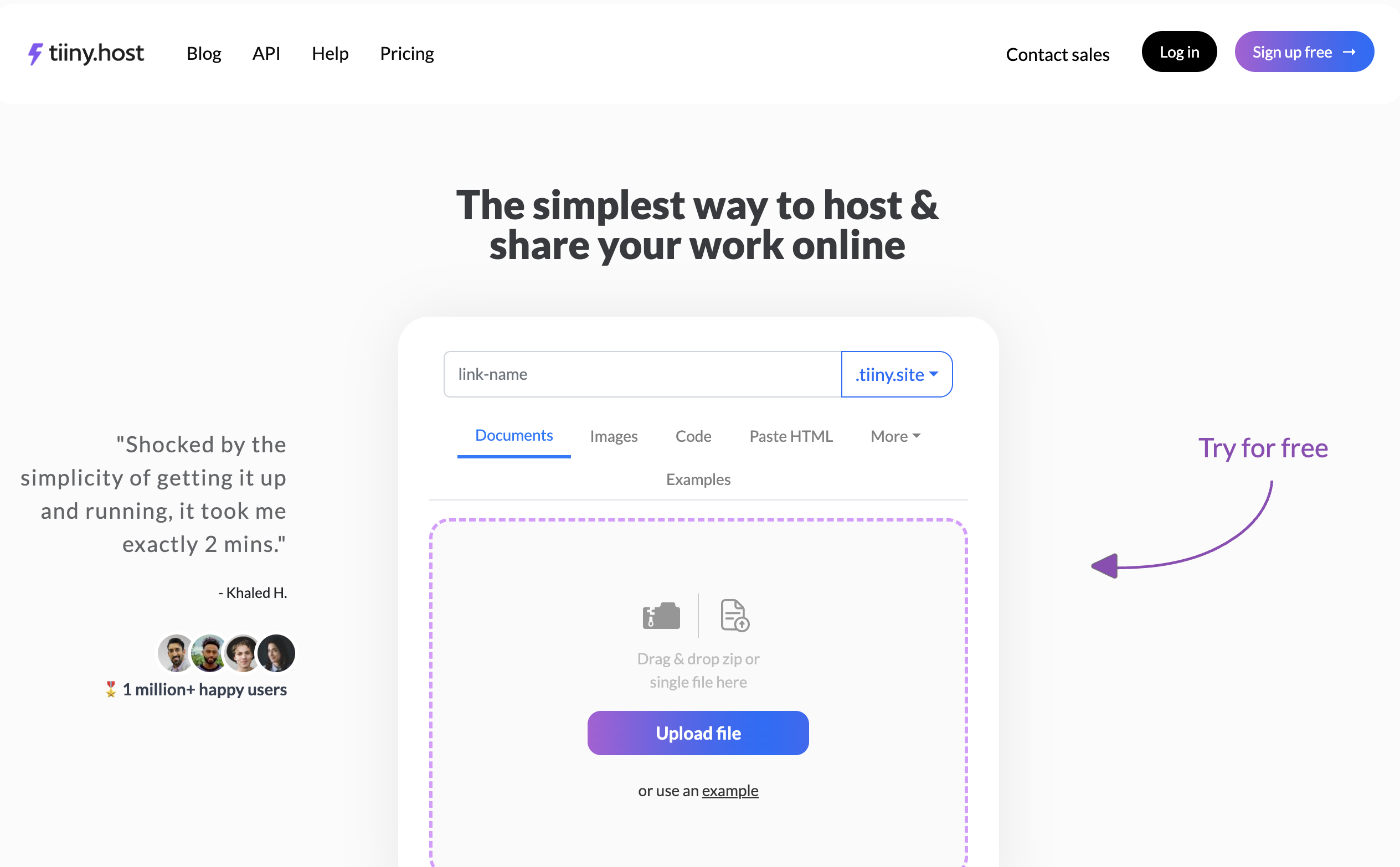
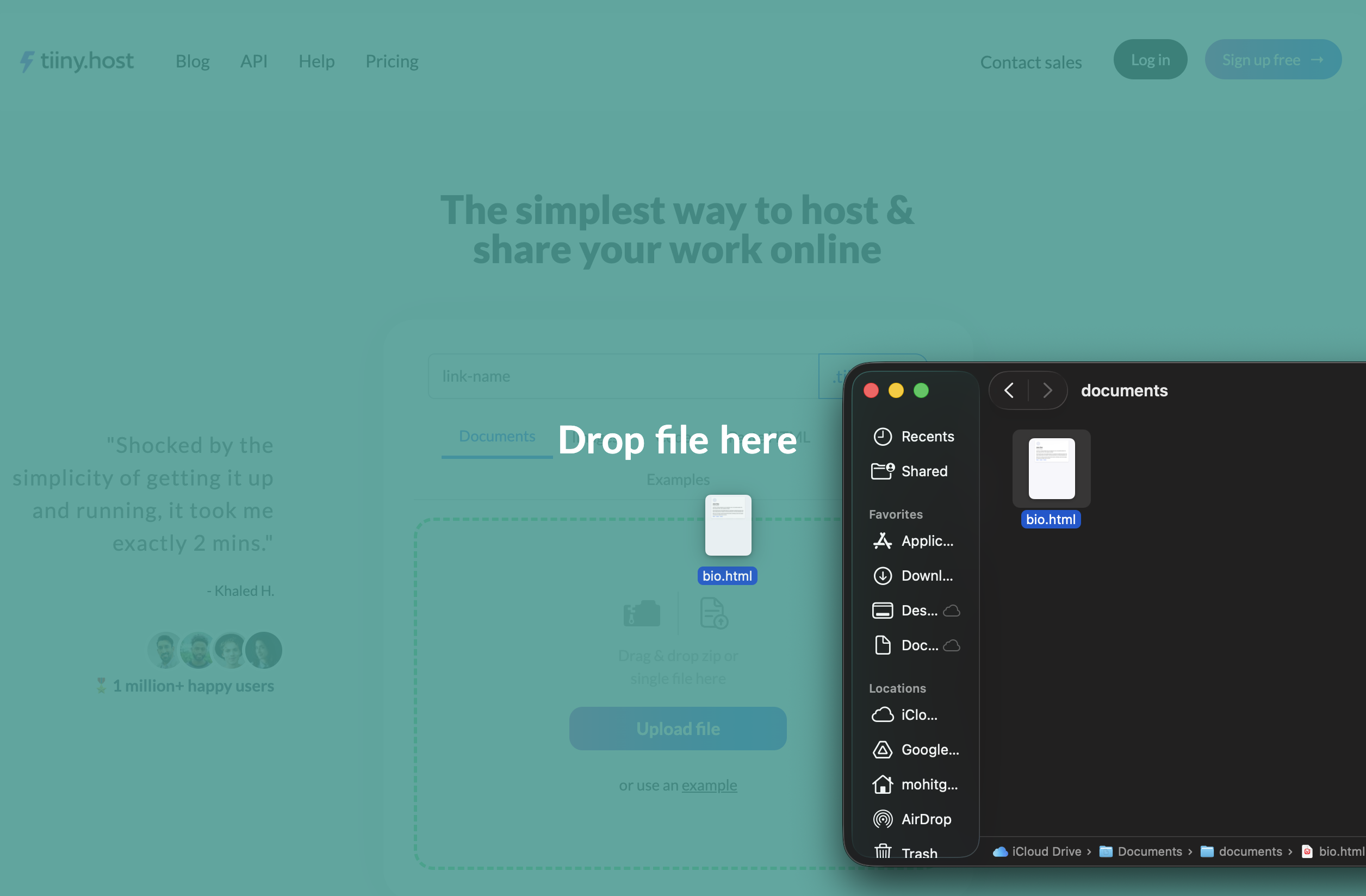
Now, drag and drop your files onto the page.
Now, create an account and hit the Publish button.
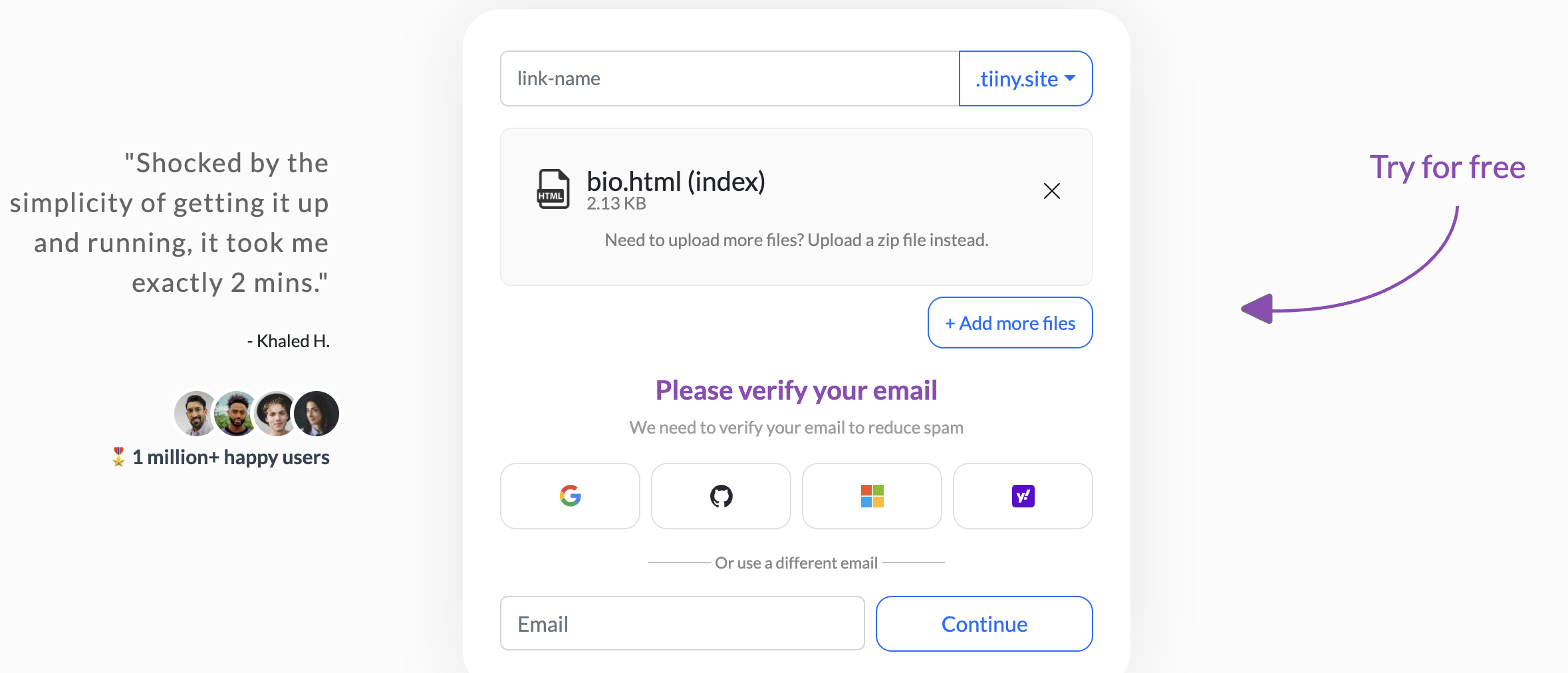
That’s it! You now have a live link you can share with people.
TiinyHost Pros
- The easiest and fastest way to host your files.
- No programming knowledge needed.
- Supports PHP sites.
- Comes with a built-in Content Delivery Network (CDN).
- Built-in analytics.
- Allows using custom domains.
TiinyHost Cons
- Not suitable for websites that require a database or serious backend resources.
- Best for static sites, not full stack backend applications.
Cloudflare Pages
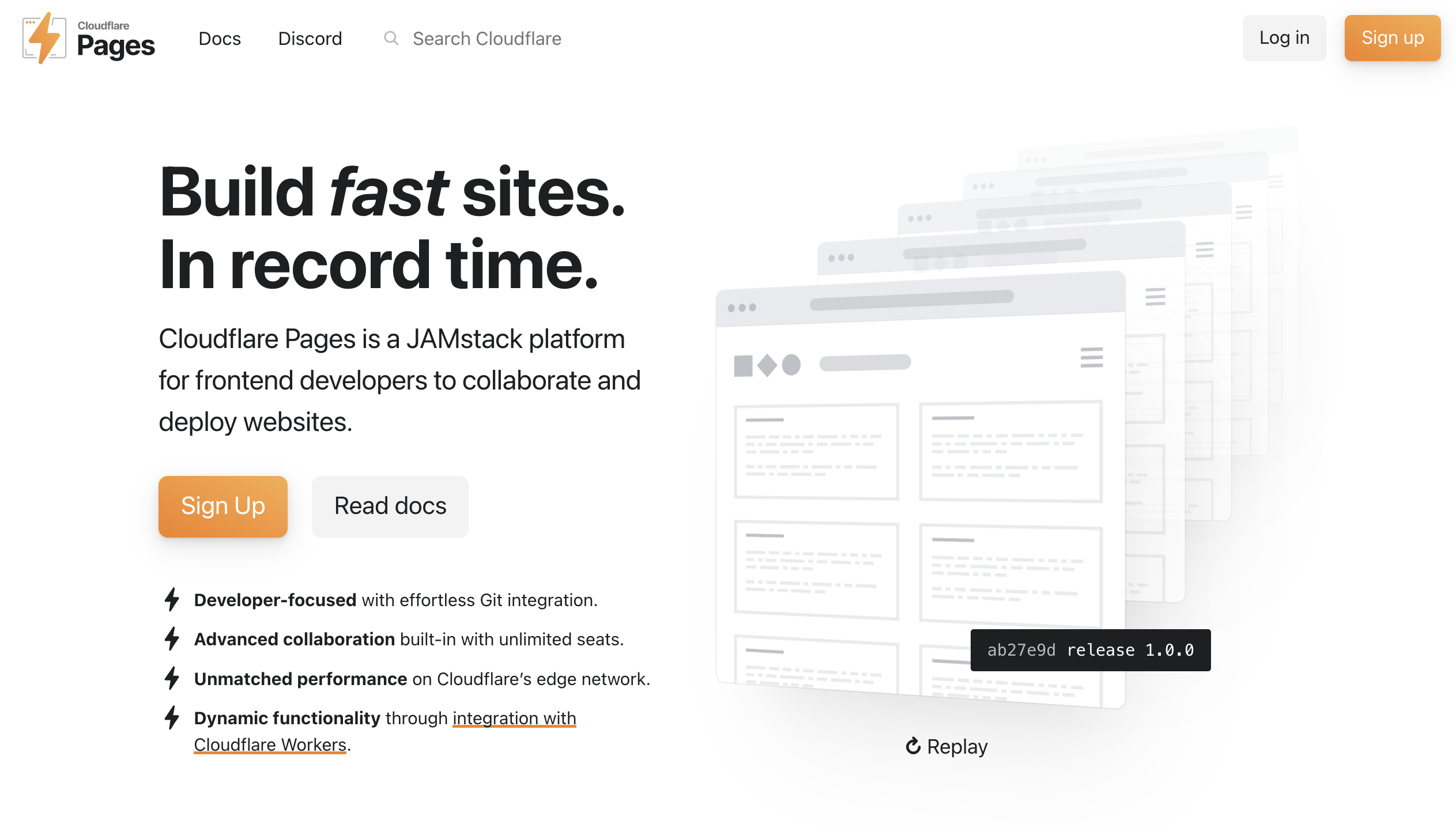
Cloudflare Pages is one of the best hosting options if you care about website performance. It serves all your website files using its CDN that is spread around the globe.
But the best part? You get unlimited bandwidth. That means, you get to host your website for free even if it gets hundreds of thousands of visitors.
The biggest problem with Cloudflare Pages is that it requires some programming knowledge to set things up. It’s the best option for hosting your website if you’re a developer.
But if you’re not a developer, then you’ll face a steep learning curve.
If you want unlimited bandwidth and don’t mind the technical workflow, Cloudflare is the best option on this list. This is especially true for static websites. Cloudflare Pages is designed to work with all static website frameworks including Astro, SvelteKit, Eleventy, and Gatsby.
Cloudflare Pros
- Unlimited bandwidth and website visitors on the free plan.
- One of the best CDNs in terms of performance.
- GitHub and GitLab integration.
- Great for developers who already use Github.
- Best option for static websites and frontend heavy projects.
Cloudflare Cons
- Requires more technical setup than most beginners would be comfortable with.
- Best suited for developers than non-technical users.
Netlify
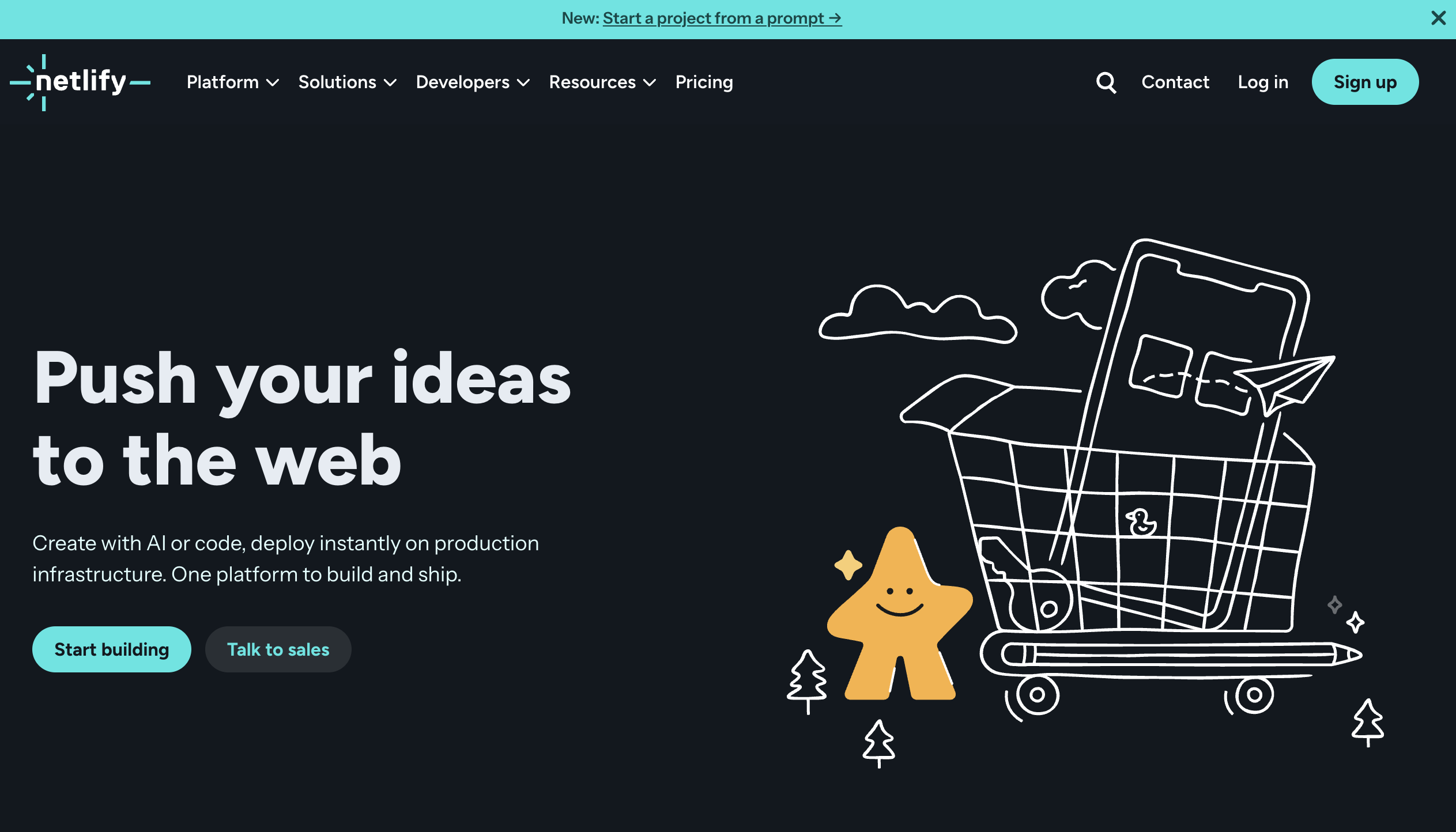
Netlify is one of the most popular web hosting platforms when it comes to JAM-Stack (JavaScript, APIs, and Markup) websites. It offers a nice middle ground between developer-focus and beginner-focus.
Netlify offers a very easy and simple setup experience. You can use their AI agent to help you build any kind of a website. Or you can set up your Github, GitLab or BitBucket repository to start deploying your website. It even supports directly uploading your static website files to host them.
That said, if you don’t know how how repositories, branches and deployments work, you will find Netlify a bit intimidating at first.
The best part about Netlify is that they are very generous with their free plan. You get 100 GB of bandwidth and 10 GB of storage for free.
Netlify Pros
- 100 GB of free bandwidth.
- 10 GB of free storage.
- Built-in CDN.
- Great for JAM-Stack websites.
Netlify Cons
- Requires some coding and Git knowledge.
Vercel
Vercel is the go-to hosting platform for NextJS and React applications. In fact, Vercel is the company behind the popular NextJS framework that now powers most modern web applications.
If you are a developer, you’ll love Vercel’s developer experience. The deployment experience is buttery-smooth. It’s almost effortless once you connect your Github repository.
But that “once you connect your Github repository” part is important. It isn’t a beginner-friendly platform that simply allows you to upload your files and call it a day.
Even though Vercel offers the most polished developer experience of all the hosts on this list, it still requires some programming knowledge to set up a new website.
Vercel Pros
- Generous free plan offers 100 GB of bandwidth.
- Built-in CDN.
- Preview deployments for every branch of your Github repository.
- Very polished user experience.
- Best platform for hosting NextJS and React web applications.
Vercel Cons
- Not the most beginner-friendly platform.
- Requires setting up a Github repository.
Render
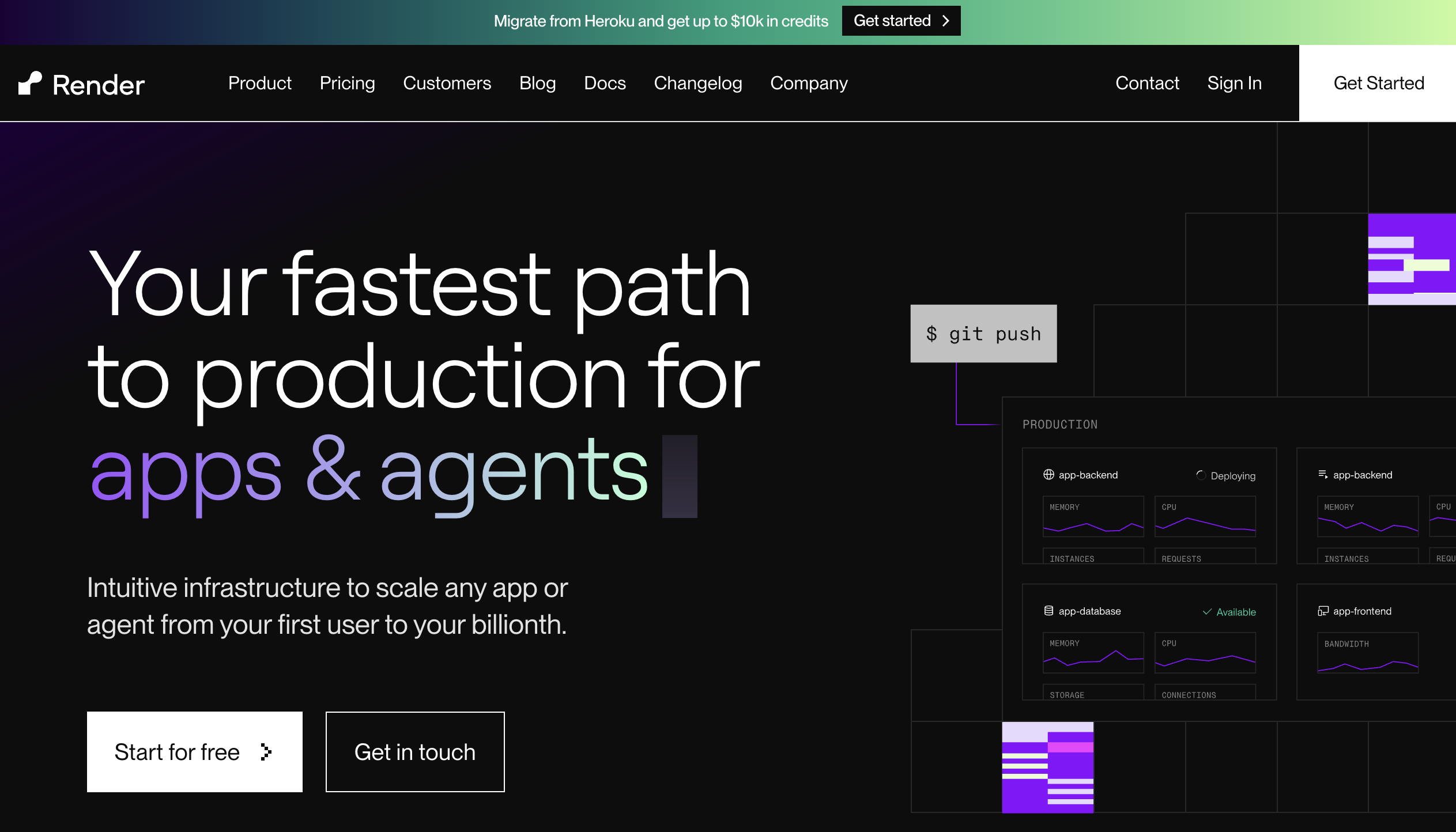
Render offers a lot more than just website hosting. It’s a complete hosting solution for full stack web applications. Some of the services Render offers: Postgres databases, Redis-like Key-Value databases, Cron Jobs, and HTTP Services.
Render might be appealing to you if you think your website might outgrow pure static hosting.
This platform offers 1 GB of disk space and up to 100 GB of bandwidth on the free plan. You are only allowed one website on the free plan, though!
If you just want to host your files online so you can share them with other people, Render is an overkill. Instead, TiinyHost will serve you better. It doesn’t require knowing Git or Github. All it takes is upload, create an account, and click publish.
Render Pros
- Free static hosting.
- 100 GB of bandwidth on the free plan.
- Up to 1 GB of free disk space.
- CDN-backed website hosting.
- Great option for developers who may need backend services in the future.
Render Cons
- Only 1 free project allowed.
- Requires Git and Github knowledge to deploy your static website.
GitHub Pages
If you already use GitHub, then GitHub Pages is an easy choice for hosting static websites. It’s completely free and has been around for a long time.
A lot of open-source libraries use GitHub pages to host their documentation sites.
But it’s not limited to just documentation sites. A lot of developers use GitHub pages to host their portfolio websites. You can use GitHub Pages to host any kind of a static website you want.
Just keep in mind that there’s a soft limit of 100 GB on bandwidth and a hard cap of 1 GB on the size of repository. Two limits you are unlikely to hit anytime soon if you’re just getting started.
GitHub Pages Pros
- Completely free for public repositories.
- Free storage of up 1 GB.
- Generous 100 GB bandwidth limit.
- Great for hosting portfolios and simple static websites.
GitHub Pages Cons
- Requires GitHub knowledge.
- A lot less polished compared to other platforms in this article.
Amazon S3
Amazon S3 is the most boring, but the most reliable choice on this list. It’s also the least beginner-friendly option.
Unlike other services in this article, S3 isn’t a simple web hosting service. It is an object storage service that allows developers to store web application assets such as profile pictures, documents, etc.
Even though it is traditionally used to store web application assets, that doesn’t mean you can’t use it to host a website. Amazon allows hosting a website directly out of S3. Just upload all your files, make some DNS changes to your domain, and you’re done!
That is if you know your way around Amazon Web Services. If not, it will be a giant headache to set everything up.
The best part about using S3 is that it offers unlimited scale. Whether your website gets 10 visitors a month or ten thousand a day, S3 can handle it.
Note: Amazon recommends using Amplify Hosting to host your static web apps instead of S3.
Amazon S3 Pros
- Extremely scalable.
- Dead simple if you know your way around AWS.
- Great for developers and advanced users.
Amazon S3 Cons
- The most difficult option to set up if you don’t have some programming knowledge.
- Not beginner-friendly at all.
- Overkill for simple websites.
Best Google Drive Alternatives
If you are just looking for Google Drive alternatives, here are three of the best ones.
Dropbox
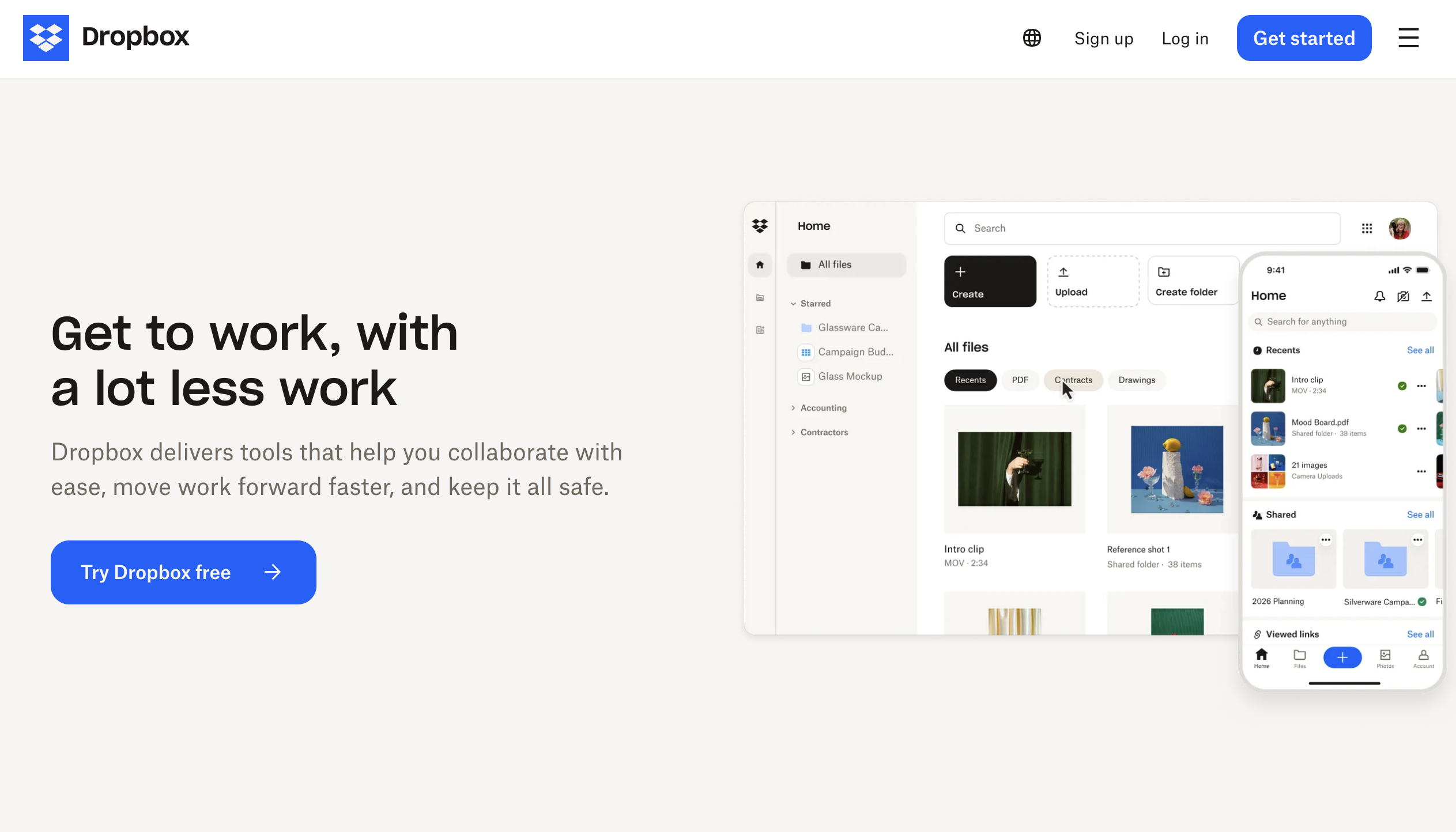
Dropbox is one of the oldest competitors to Google Drive. They have made a name for themselves in the business world and their service is used by professionals all over the globe.
It has everything:
- File storage.
- Collaboration features.
- Sync files between multiple devices.
- Access your files from anywhere with an internet connection.
Dropbox is highly polished when compared to Google Drive. It also offers a lot more features.
If you are looking for a collaboration platform that supports everything from Docs to Sheets, then Dropbox might not be the platform for you.
But if you need a platform that features first-class file sharing, file sync, and team collaboration features, then Dropbox remains a reliable choice. It offers a desktop client, and mobile apps allowing you to access your data anytime, anywhere.
It also comes with a product called Dropbox Paper, which gives you a lightweight writing and collaboration space. It’s not the same as a full office suite, but it does come with real time document editing collaboration.
Most serious users eventually end up on paid plans or business plans rather than staying on the free tier. Dropbox costs nothing for their starter plan and allows up to 2 GB of storage.
Dropbox Pros
- Strong file syncing features that sync files across all your devices.
- Highly polished, intuitive user friendly experience.
- Great for freelancers and agencies.
- Great for managing files across your devices.
Dropbox Cons
- Not for you if you’d miss the ease of editing excel files with Google Sheets.
- Only 2 GB of free storage on the free plan.
NextCloud
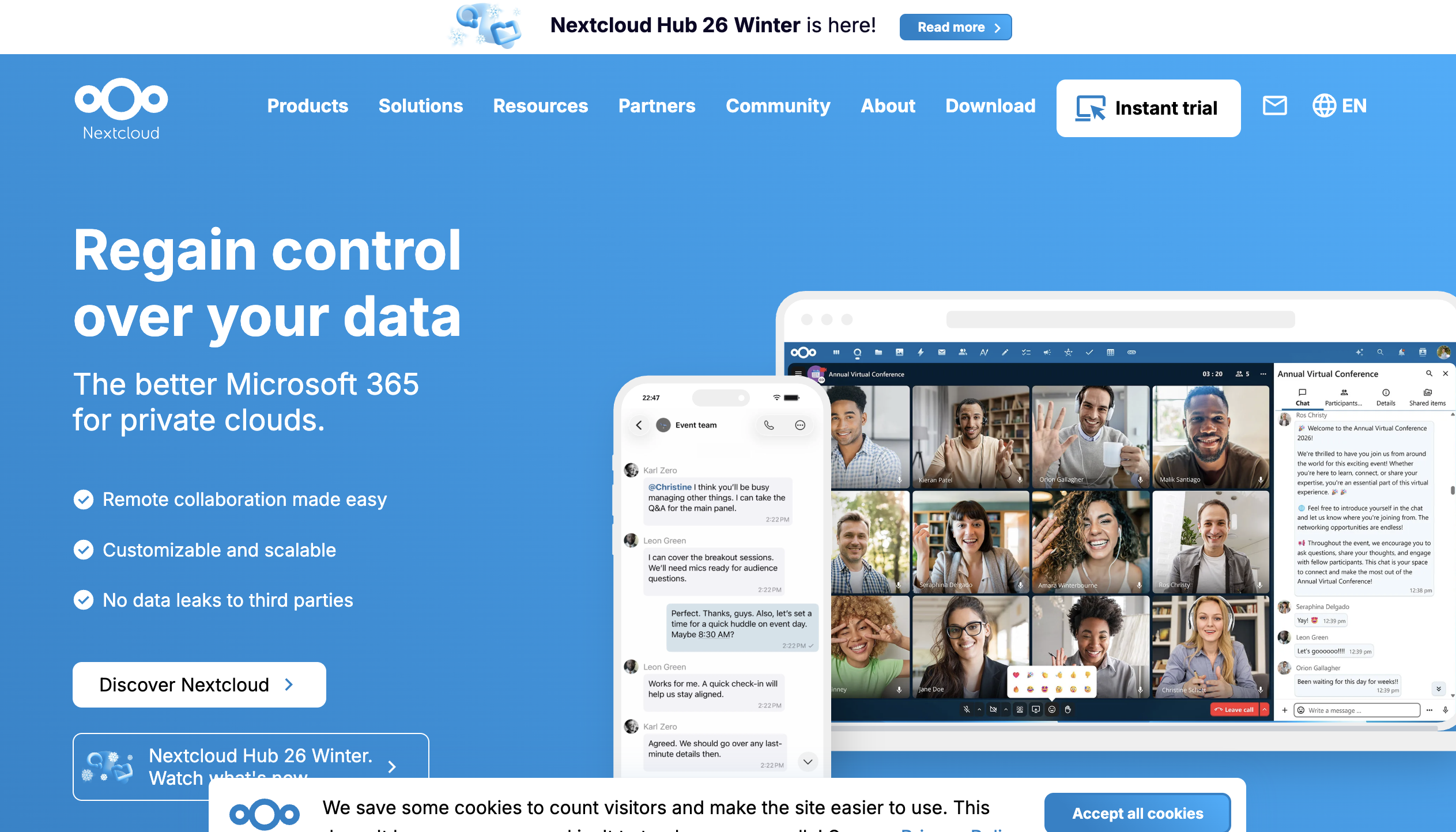
NextCloud is a Google Drive replacement for people who want more control.
If you don’t want your files sitting on google’s servers or inside another big tech platform, NextCloud might be what you’re looking for.
It’s an open source platform that supports file storage, file sync, and collaboration. That means, you can host it on your own VPS server, a home server, or a Raspberry PI. That matters if you handle sensitive data or simply care about privacy.
It also works through a browser-based web interface and can feel surprisingly polished once configured.
The best part about NextCloud is that it is self-hosted. You run it on your own infrastructure. That means, your files are as private as they can get. This platform is great for privacy-conscious users and organizations.
NextCloud comes with a product called NextCloud office. It allows you to create, edit and collaborate on spreadsheets, documents, and presentations.
NextCloud Pros
- Self-Hosted Solution that is great for privacy-conscious users.
- Free and open source platform.
- Great for privacy and data protection.
- Supports file sync, sharing and collaboration.
- Can run on your own operating system, VPS, local machine, or local network.
- You host your own files.
NextCloud Cons
- Being a self-hosted platform, it requires a bit technical knowhow to set up and maintain.
- You need your own backup strategies if you don’t want to lose your data.
Sync.com
Sync.com is a privacy-first cloud storage platform that offers end-to-end encryption of your files. That means, there is no way anyone can see your files or their contents without your permission.
The platform encrypts your files at rest.
The best part? They offer a Basic Plan that is only 1 dollar per month and offers 25 GB of storage.
Sync.com is more of a privacy-first cloud storage provider than a complete alternative to Google Drive suite of productivity features.
The downside?
If you want the most seamless cloud-native editing and collaboration experience, Google Drive still feels more native in that area.
Sync.com Pros
- Privacy-first cloud storage.
- End-to-end encryption of your files.
- Great for secure cloud storage.
- The free plan allows 5 GB of free storage.
Sync.com Cons
- Better for secure, private storage than rich document collaboration.
- Less of a full productivity suite replacement.
Proton Drive
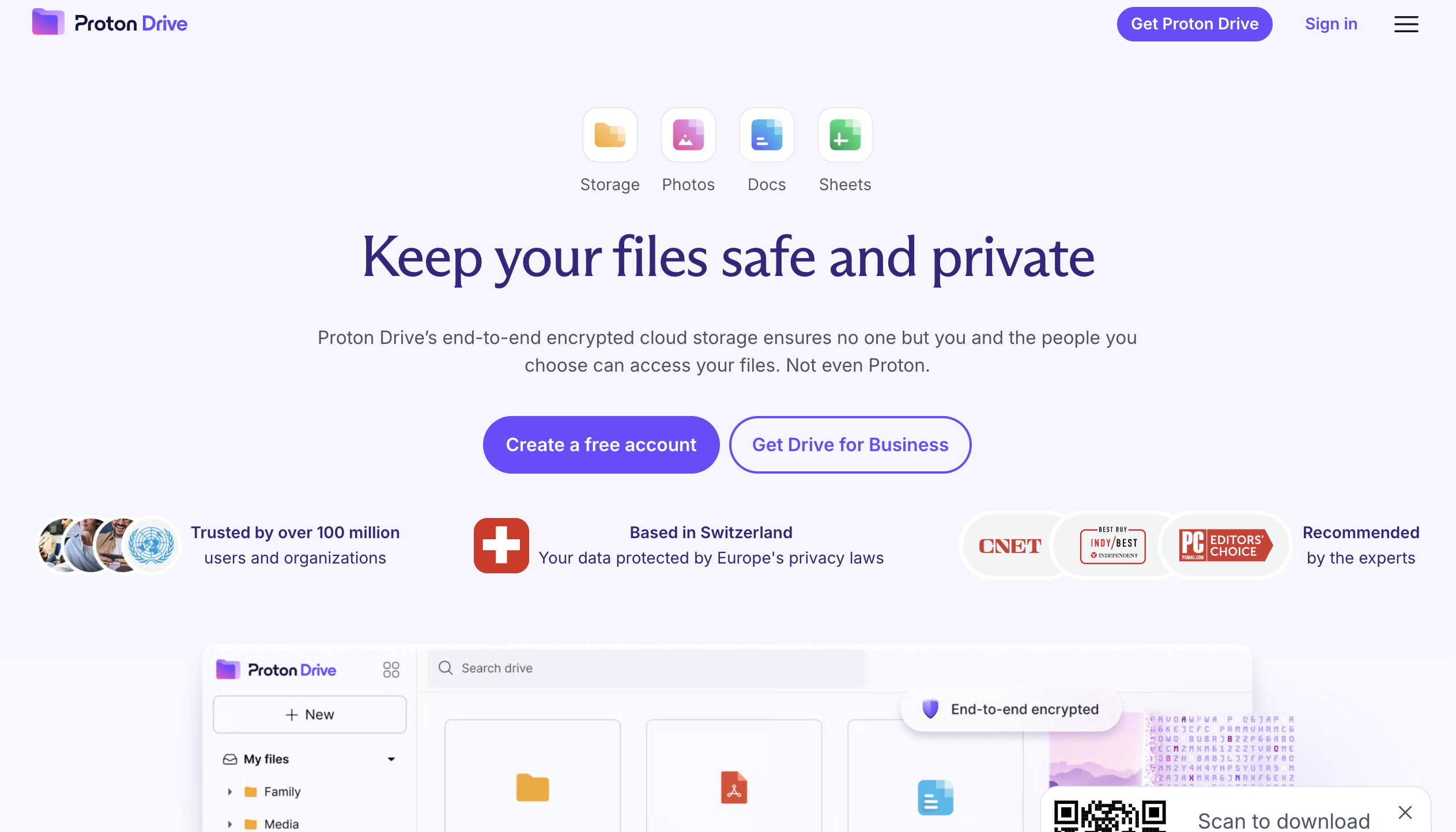
Proton Drive is a privacy-first cloud storage platform designed by the same people behind Proton Mail.
If you care about privacy, this is one of the strongest options.
This is a big difference from the mainstream storage tools. With privacy-first platforms, the emphasis is not just on convenience. It is on control, trust, and security.
That security model also means you need to think carefully about encryption keys and account recovery. Privacy is great, but privacy tools can be less forgiving if you lose access.
Proton Drive Pros
- Strong secure cloud storage focus.
- Built around end to end encryption.
- Good for sensitive data.
Proton Drive Cons
- Less suited for teams that need rich real time collaboration.
Things to Look For in a Google Drive Alternative
All storage providers on this list solve a different problem.
Some are great for collaboration, while others are great at privacy.
Here are a few things to look for when comparing your options:
- Limits on file size limits.
- Whether there are mobile apps and a desktop client.
- Whether the platform offers features like version history, custom branding, admin controls, or expiration dates for shared links.
- Whether you can pay monthly or choose lifetime plans.
Some people also care about niche extras. For example, Google has products like Google Photos with facial recognition.
Frequently Asked Questions
Can I still use Google Drive to host a website?
No. You can no longer host a website using Google Drive. Google discontinued this feature is 2016.
What is the easiest free alternative to Google Drive for hosting a website?
TiinyHost is the easiest and fastest free alternative to Google Drive for hosting a website. It doesn’t require any programming knowledge or complex setups. It just requires uploading your files and creating an account. That’s it! Those are the only two steps needed.
You can host any shareable file including PDF files, presentations, excel sheets, a static website, or a MVP demo.
Does Netlify require coding knowledge?
That depends on what you’re trying to build. For most cases, it does require a little bit of programming knowledge. Netlify is easier than traditional web hosts but it is still a developer-centered platform.
Is GitHub Pages completely free?
Yes, GitHub pages is completely free for public repositories. But it comes with some limits you need to keep in mind. Your repository cannot be larger than 1 GB and there’s a 100 GB limit on bandwidth.
What happened to Google Drive website hosting?
Google discontinued Google Drive website hosting feature in 2016. They deprecated it in 2015, so they could focus more on the core Drive functionality.
Conclusion
Google Drive is still great for file storage and collaboration.
But the website hosting feature is now gone.
If you want the easiest hosting option, go with TiinyHost.
If you just want a true google drive alternative for comprehensive cloud storage, choose the one that fits how you work, where your data lives, and how much control you want.